
Hiring events can be a highly effective way to meet candidates face-to-face, fill roles quickly, and generate excitement around your company. But they’re also easy to get wrong. Without the right structure and planning, a hiring event can become chaotic, rushed, or leave both candidates and staff feeling overwhelmed.
This guide outlines what it takes to plan and run a successful hiring event—one that attracts quality candidates and reflects your company’s values and professionalism.
Step 1: Define Your Goals
Start by getting clear about why you’re holding the event. Are you looking to fill a large number of entry-level positions quickly? Trying to build a pipeline for skilled roles? Promoting your company to a new talent pool?
Your goals will shape how you promote the event, who should be involved, and how success is measured.
Step 2: Promote With Purpose
Give yourself enough lead time to get the word out. Use a mix of channels:
- Social media posts with clear role details
- Text message campaigns
- Signage in high-traffic areas
- Partnerships with community organizations, schools, and workforce programs
Make sure your messaging is specific—vague ads lead to vague turnout. Clarity on location, pay, schedule, and job duties helps filter and attract the right candidates.
Step 3: Logistics Matter More Than You Think
This is where many hiring events fall short. Logistics will make or break the candidate experience. A well-run event should be:
- Easy to find, with clear signage and directions
- Well-staffed, with team members assigned to greet, check-in, interview, and follow up
- Structured, with a clear flow for candidates from entry to exit
- Comfortable, with space for waiting, privacy for interviews, and accommodations for any accessibility needs
Prepare materials in advance—job descriptions, applications, interview guides, and offer details. Know how many people you can reasonably process in the time you’ve scheduled, and make sure decision-makers are available if on-the-spot offers are an option.
Step 4: Make It Candidate-Friendly
Candidates should walk away feeling informed and valued, even if they aren’t selected. That means:
- Warm greetings and clear communication
- Transparent information about the job, expectations, and next steps
- Consistent messaging across your team
First impressions go both ways. The hiring event is as much about the candidate evaluating you as it is the other way around.
Step 5: Debrief, Learn, and Follow Up
After the event:
- Review what worked and what didn’t
- Collect feedback from your team and attendees
- Track your results (attendance, interviews completed, offers made, hires started)
- Follow up quickly with candidates who showed potential but weren’t immediately placed
This data will help you continuously improve—a central tenet of LEAN methodology and efficient workforce planning.
One Last Thought
If this seems like a lot—it’s because it is.
A successful hiring event takes careful coordination, strong messaging, and detailed execution. It’s not just about showing up with clipboards—it’s about designing a process that reflects your organization, supports your brand, and connects with the right talent.
That’s why many companies turn to staffing partners to support or fully manage the event. At Specialized Staffing Solutions, we’ve refined the hiring event process to make it seamless and high-impact.
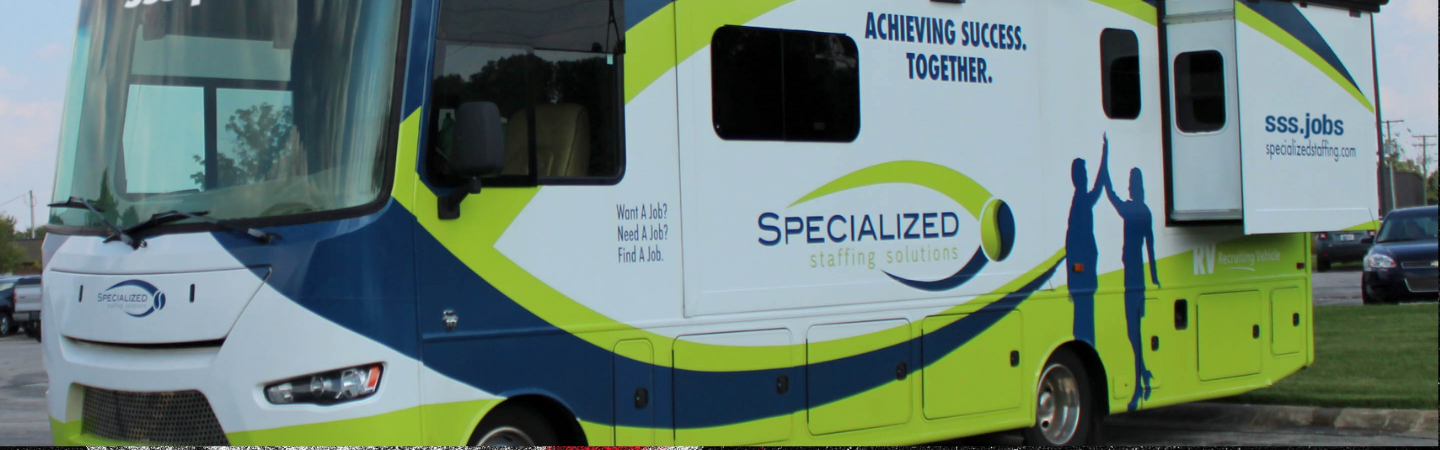
We average 75+ applicants per event, with many events seeing well over 100 attendees when supported by our full outreach strategy. We bring structured logistics, trained event staff, and even our Class A Recruiting Vehicle—a fully mobile hiring center that allows us to run events anywhere, from worksites to community centers. We handle the promotion, candidate flow, interviews, and onboarding—all under one roof (or wheels).
Our hiring events are designed to do more than just collect résumés—they are built to move people through your process, ensure quality screening, and generate real hires.
Whether you choose to run your own hiring event or ask us to help—we’re here to support building a process that works. Because filling roles is one thing. Filling them well, and with lasting results, is another.